


The short answer: AI workflow automation connects AI-driven decision-making to the actual steps of a business process — triggering actions, routing tasks, and making judgment calls that used to require a human, wired directly into the systems where the work happens. It's different from traditional automation because the AI layer can handle ambiguity and make contextual decisions, not just follow fixed rules.
What is AI workflow automation, and how does it actually work?
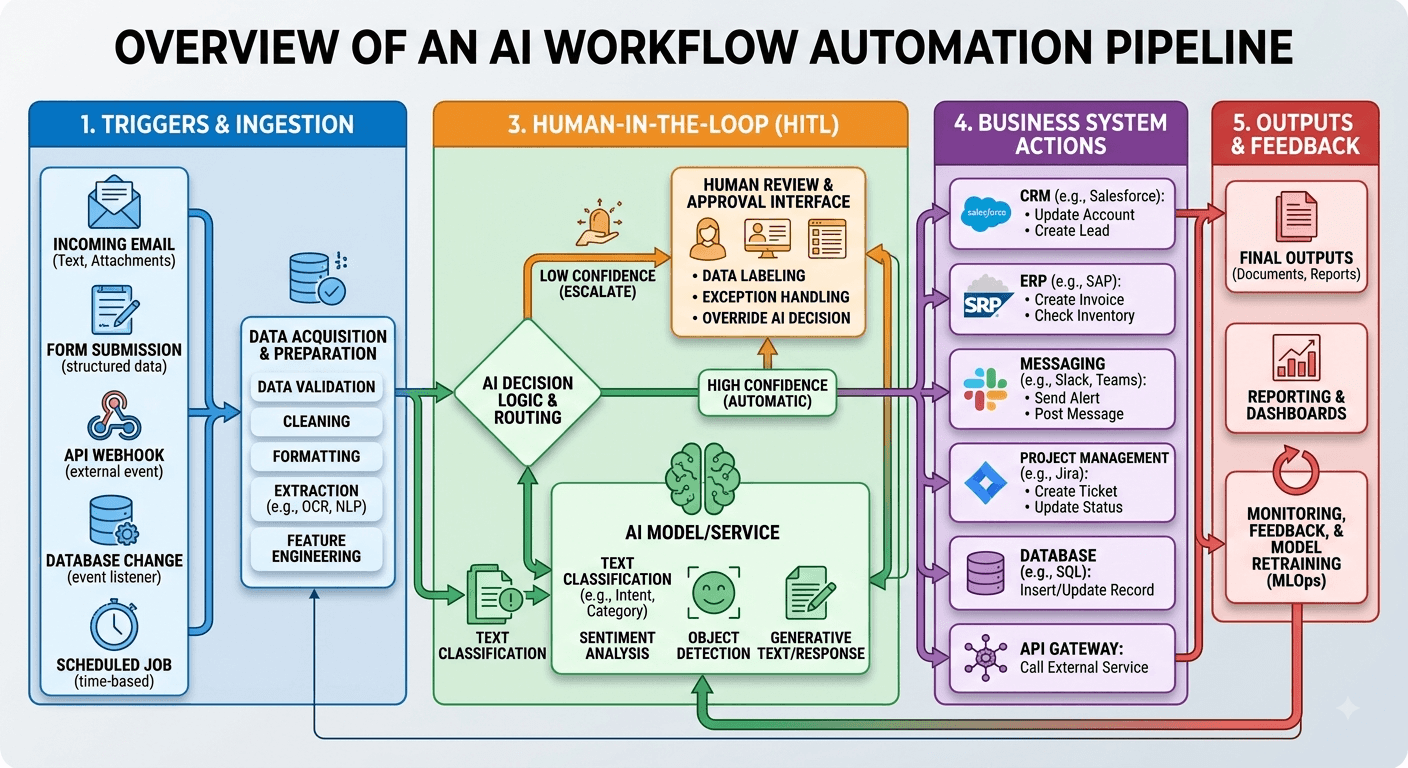
How this differs from traditional automation
Traditional workflow automation (rule-based triggers, if-this-then-that logic) is excellent at handling predictable, well-defined steps but breaks down the moment a decision requires judgment, unstructured information, or handling a case nobody explicitly programmed for. AI workflow automation adds a layer capable of reading unstructured input (an email, a document, a customer message), making a contextual judgment, and then triggering the same kind of system actions traditional automation would — the AI handles the ambiguous part, the automation handles the mechanical part.
Where AI workflow automation earns its cost
It's most valuable where the previous bottleneck was a human reading and interpreting unstructured information before deciding what to do — triaging support tickets, extracting data from varied document formats, routing requests based on content rather than a fixed field, or drafting first-pass responses for human review. These are cases where traditional rule-based automation genuinely can't help, because the input varies too much to encode as fixed rules, and hiring more people to read and route manually doesn't scale.
Testing and reliability for AI workflows
Because AI workflow automation touches real business systems and often acts with some autonomy, it needs the same rigor as any AI agent — golden datasets, defined evaluation, and the workflow-specific testing discipline covered in our guide to agentic workflow QA, since the failure points are often in the seams between the AI's decision and the system action it triggers, not in the AI's judgment alone.
Getting started
The best starting point is a single, well-defined process with a clear volume problem — something currently bottlenecked by manual review of unstructured input, with a measurable outcome for success. Scoped this way, an AI workflow project ships in weeks and proves value before expanding to adjacent processes, the same scoping discipline behind every AI implementation that actually succeeds. Our AI development team starts every workflow automation engagement by mapping where ambiguity is actually the bottleneck — because that's the only place this technology earns its cost.
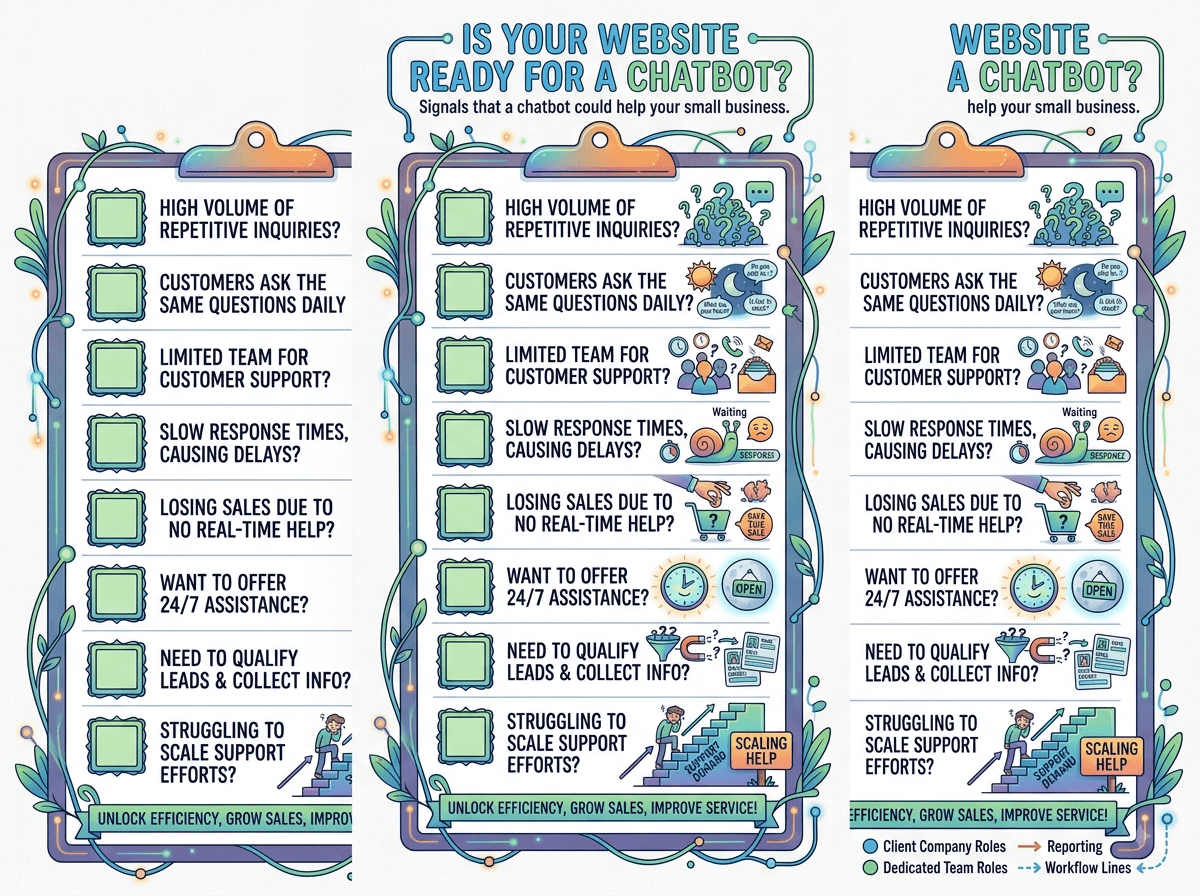
Do I need a chatbot on my small business website?
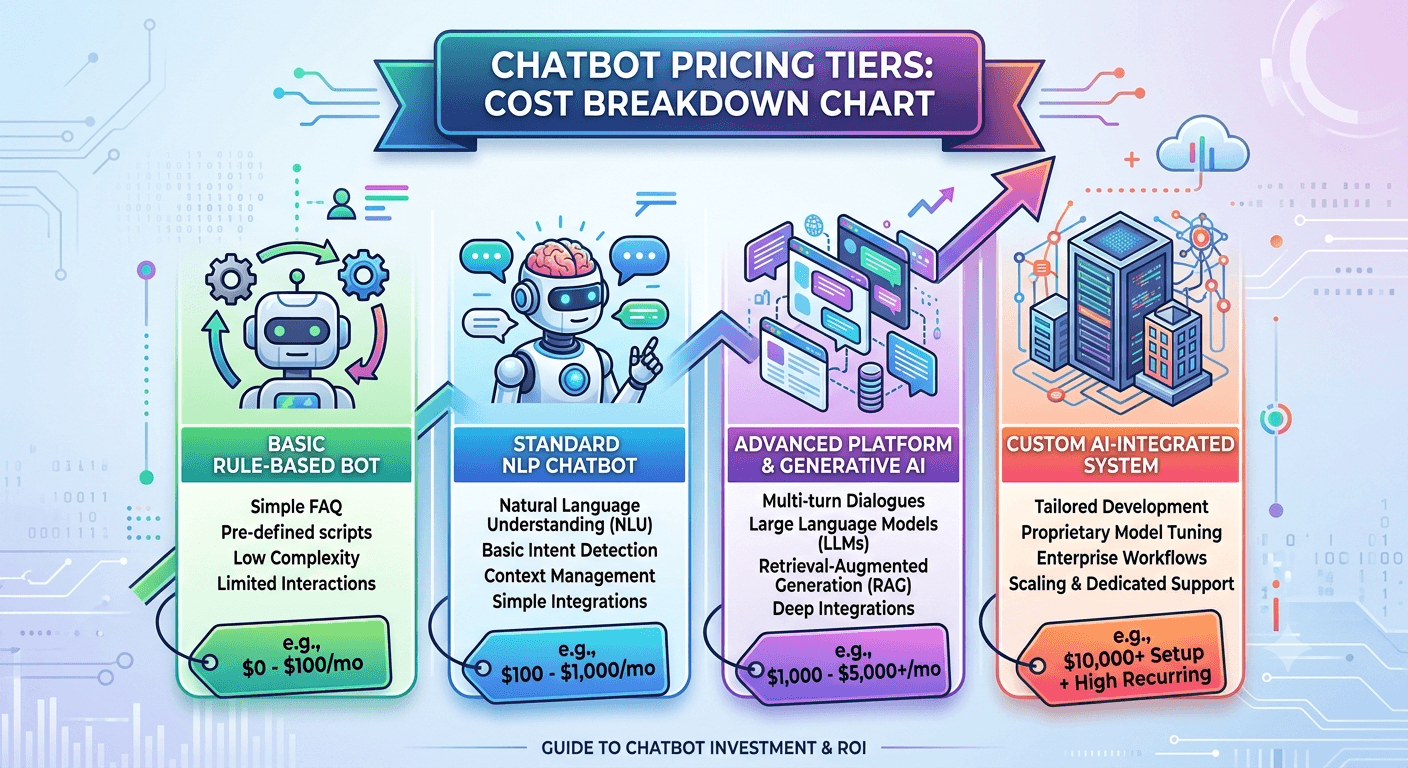
How Much Does a Custom Chatbot Cost? | Electronikmedia
How to choose a QA outsourcing partner (the questions that actually matter)
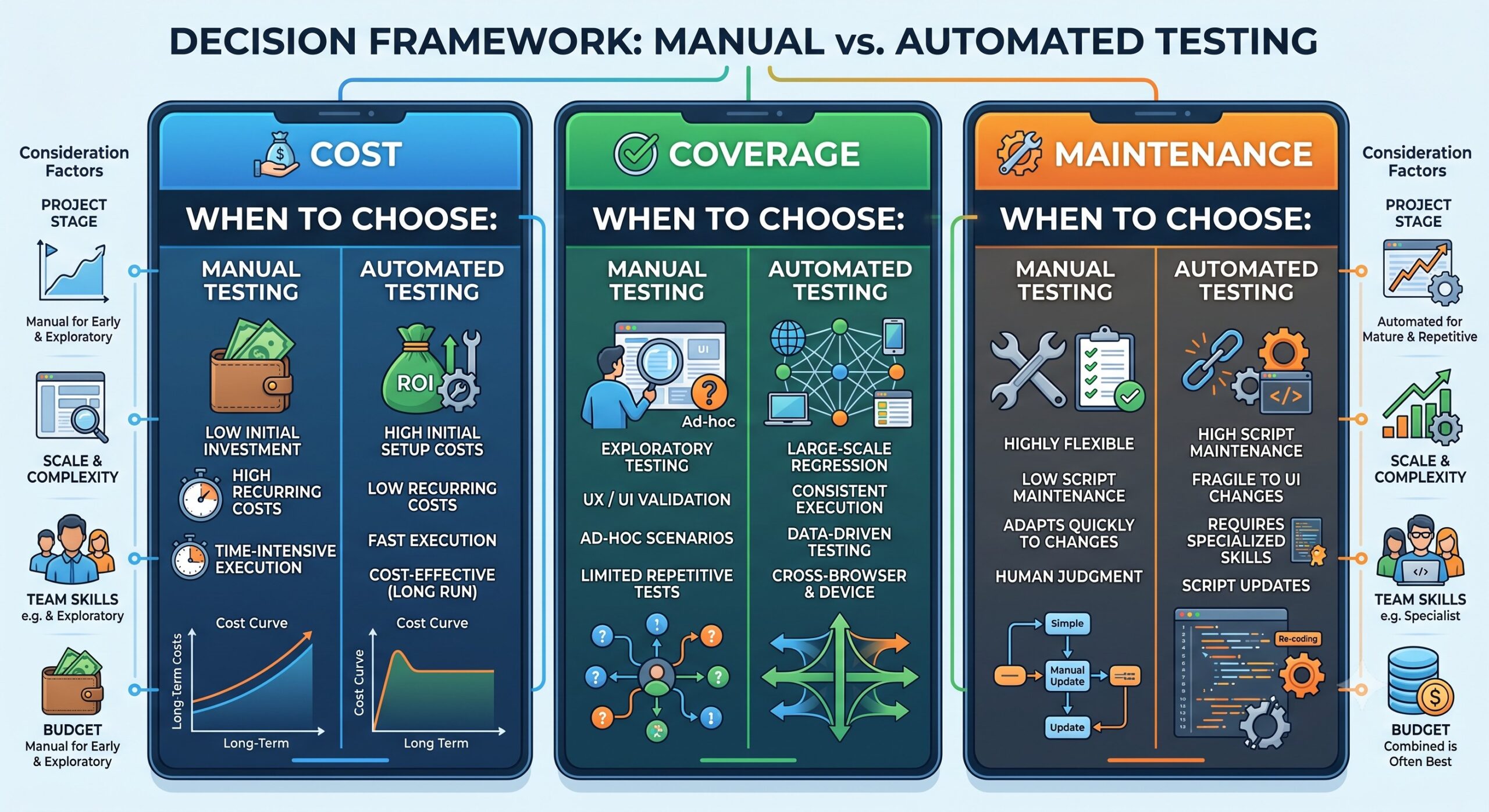
Manual vs automated testing: which does your project actually need?
