


Manual vs automated testing: which does your project actually need?
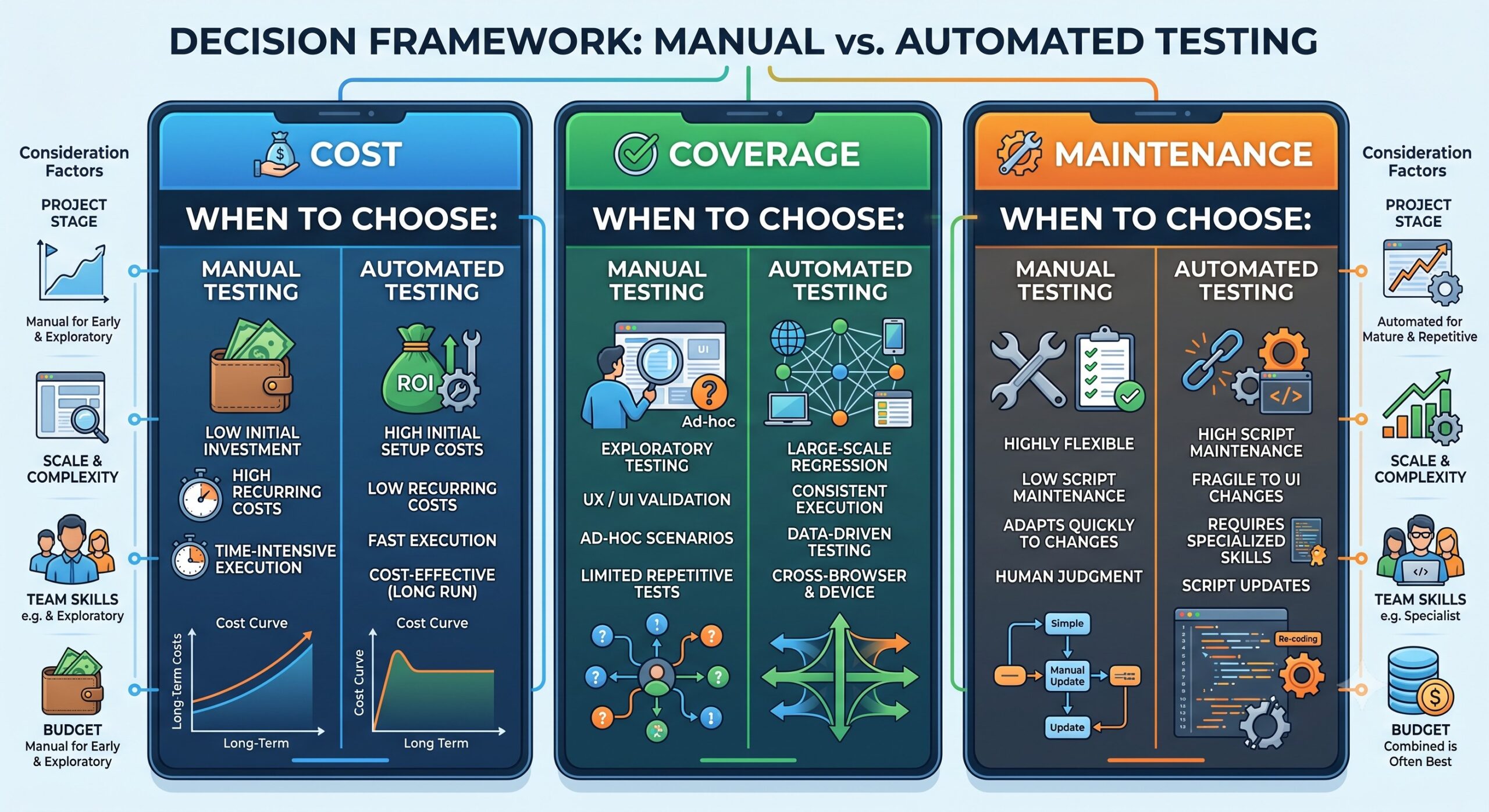
The short answer: most real projects need both, in different proportions depending on what's being tested — automation for stable, repetitive, high-volume checks, and manual testing for anything exploratory, visually subjective, or still changing frequently. Treating this as an either/or choice is the most common mistake teams make when planning QA.
Automated tests excel at regression testing (confirming existing functionality still works after a change), high-volume repetitive checks (running the same test across hundreds of data combinations), and anything that needs to run constantly (every commit, every deploy). Once written, automated tests execute in minutes and never get bored or careless the way repetitive manual testing does. The tradeoff: automated tests are expensive to write and maintain, and they only catch what they were explicitly built to check — they have no judgment about anything outside their scripted path.
Manual testing excels at exploratory testing (a tester probing the product the way a real user might, finding issues nobody thought to script for), usability and visual judgment (does this actually feel right, not just technically function), and testing features still in active flux, where writing and maintaining automation would be wasted effort on something that'll change again next sprint. The tradeoff: manual testing doesn't scale efficiently for high-repetition scenarios, and it's slower for large regression suites run frequently.
Automated tests aren't a one-time investment — they need updating every time the underlying feature changes, and a poorly maintained automation suite becomes a liability: false failures that erode trust in the suite, or worse, tests quietly disabled because they're "always red" and nobody has time to fix them. Teams that automate everything without budgeting for ongoing maintenance often end up with an expensive suite nobody trusts, which is worse than a smaller, well-maintained one.
Automate when: the feature is stable and unlikely to change soon, the test needs to run frequently (every build or deploy), and the scenario is well-defined enough to script precisely. Keep manual when: the feature is new or actively changing, the test requires human judgment about look, feel, or user experience, or the scenario is genuinely exploratory and benefits from a tester's intuition about where bugs might hide.
This same manual/automated split applies to testing AI systems, with an added layer — AI output isn't deterministic, so "automated" testing for AI usually means automated scoring against a golden dataset rather than exact-match assertions, a distinction we cover in our framework for testing AI agents. The same principle holds: know what each method is actually good at before defaulting to either one.
The question isn't "manual or automated" — it's "which parts of this project benefit from which approach, and in what proportion." A thoughtful QA strategy usually lands around automating the stable, repetitive, high-frequency checks while keeping manual testing for anything still evolving or requiring human judgment. Our QA and software testing team builds this mix deliberately into every engagement rather than defaulting to one approach because it's trendier or easier to sell.
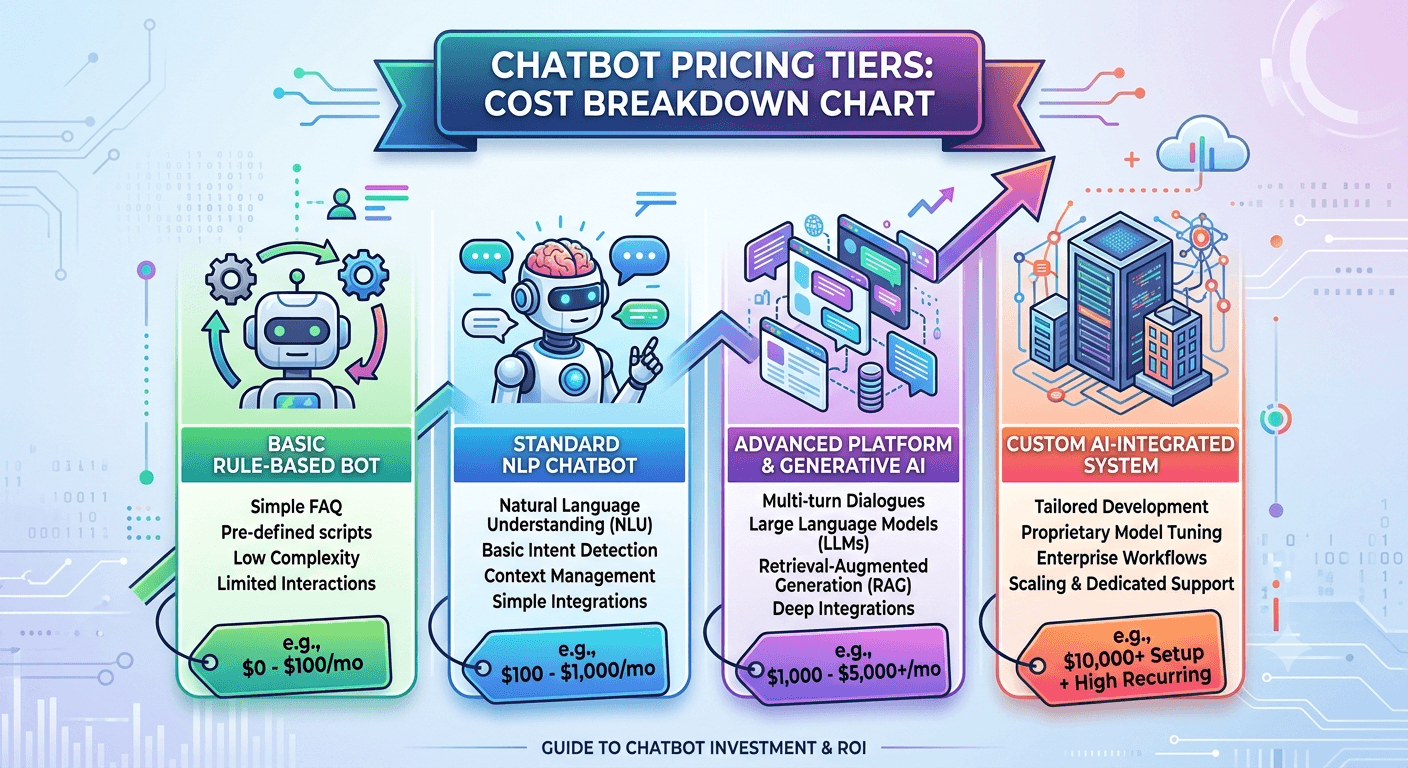
How Much Does a Custom Chatbot Cost? | Electronikmedia

How to choose a QA outsourcing partner (the questions that actually matter)
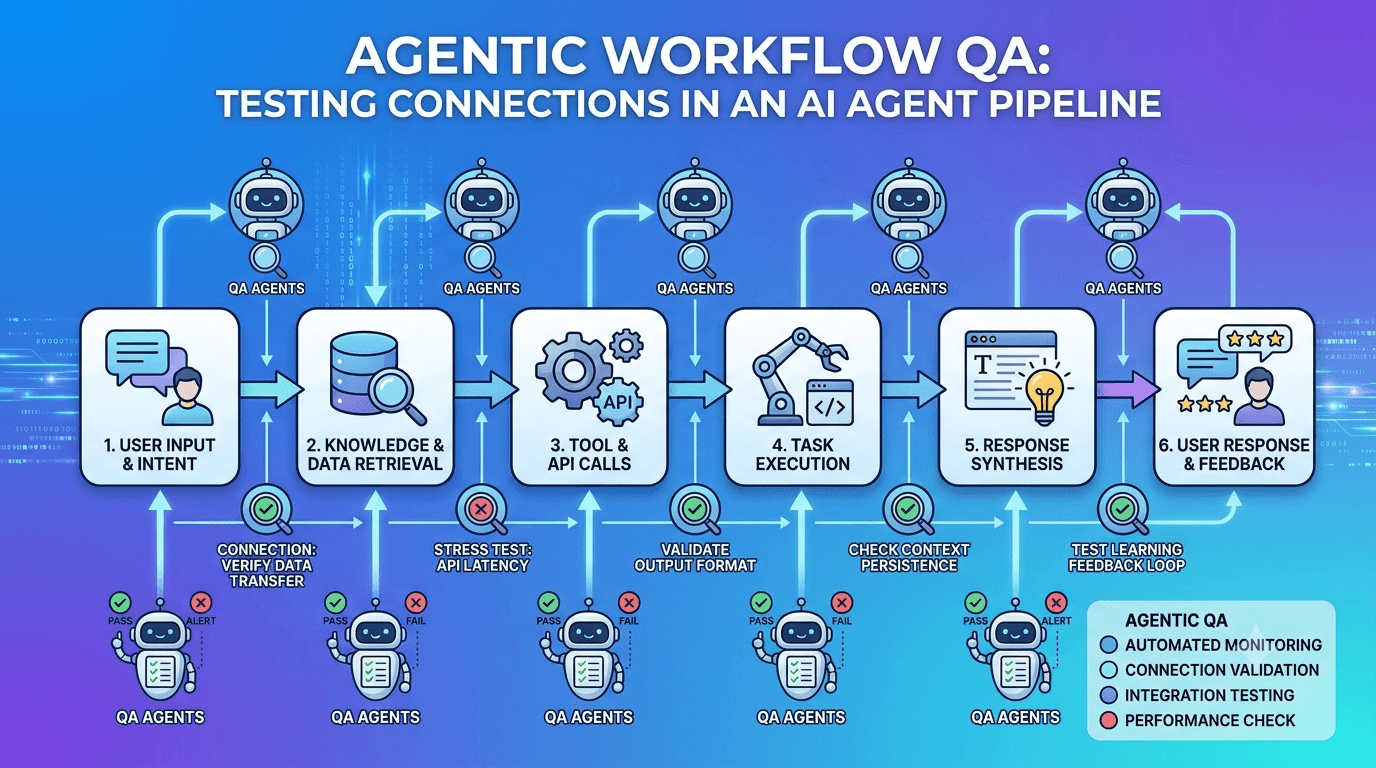
What is agentic workflow QA (and why it’s different from testing a chatbot)
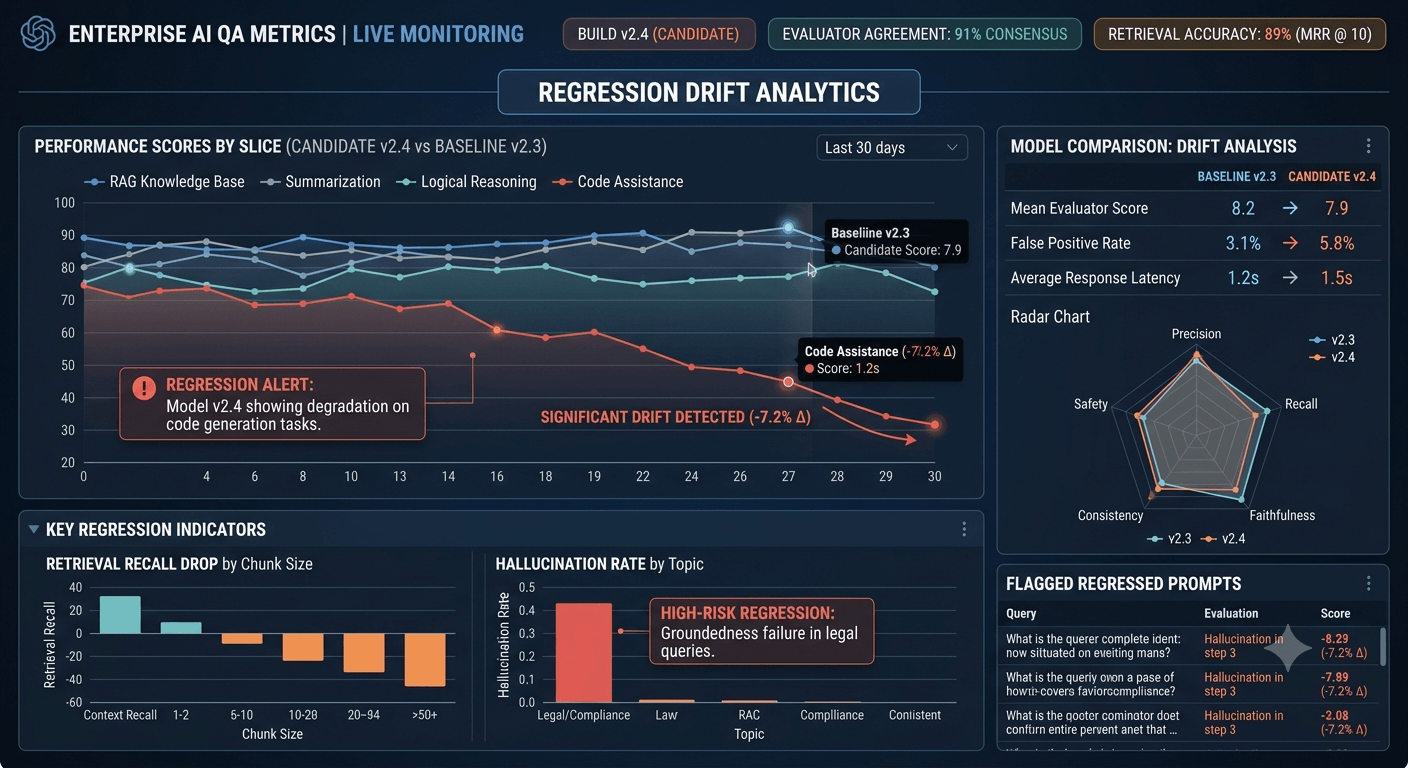
QA metrics that actually matter for AI-driven QA teams
