


The short answer: evaluate a QA outsourcing partner on their testing process and communication discipline first, their technology-specific experience second, and their pricing last — because a cheap QA partner with a weak process costs more in escaped defects than the savings on the invoice. Price is the easiest thing to compare and the least predictive of actual outcome quality.
How to choose a QA outsourcing partner (the questions that actually matter)
Start with their process, not their portfolio
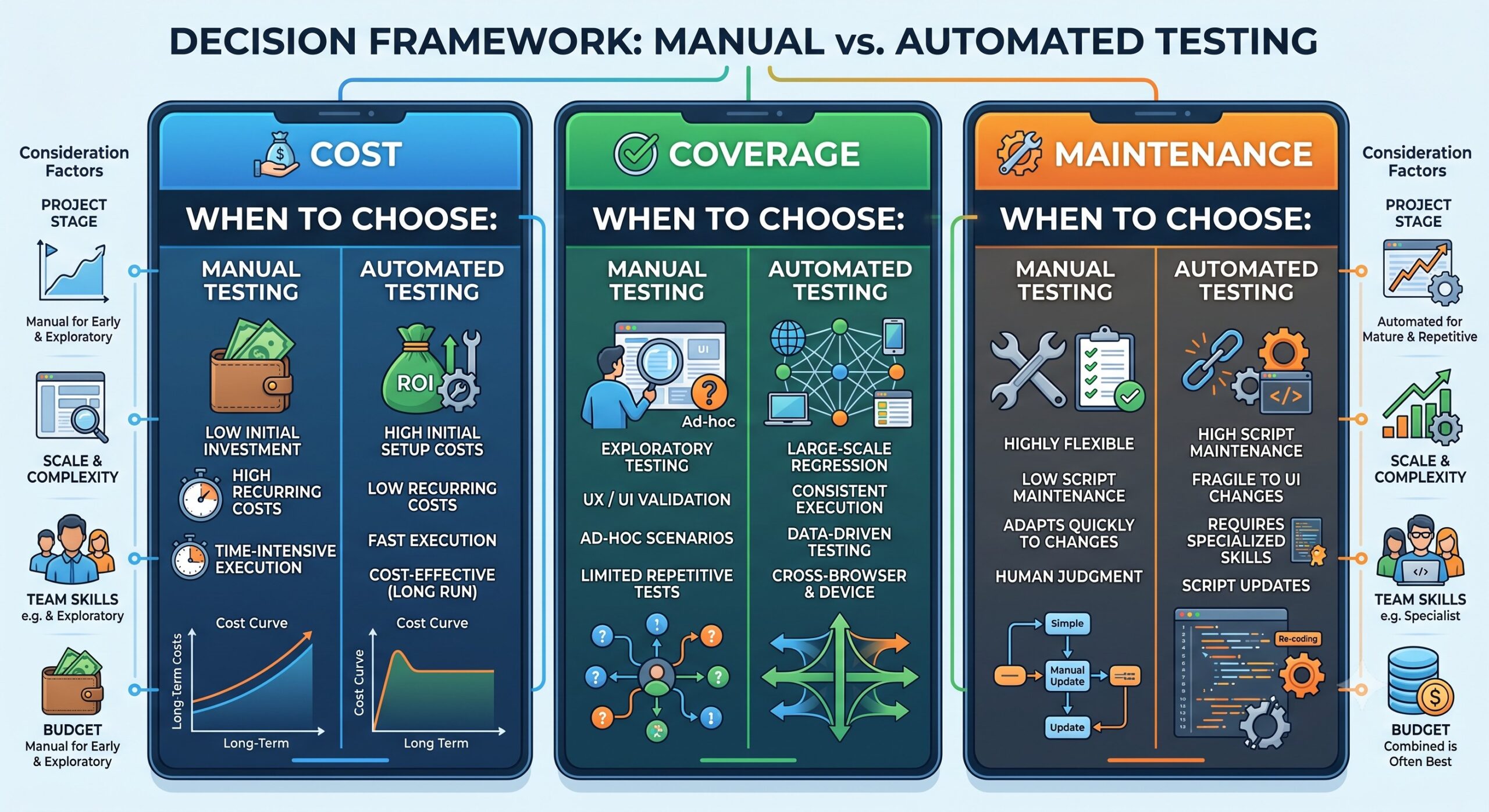
A logo list of past clients tells you who hired them, not whether the testing was good. Ask instead: how do they structure test planning, what's their defect triage and reporting process, and how do they decide what to automate versus test manually (see our manual vs automated testing framework for what a thoughtful answer sounds like). A partner with a vague or overly generic answer to "walk me through your testing process" is a red flag regardless of how impressive their client list looks.
Communication cadence matters more than most buyers expect
QA outsourcing fails most often not from lack of technical skill but from poor communication — defects reported without enough context to reproduce them, status updates that don't surface real risk, or a partner who tests in isolation from the development team instead of collaborating on what actually needs coverage. Ask specifically how they report defects, how often you'll get status updates, and what tools they use to keep testing visible to your team in real time rather than in a weekly summary email.
Domain and technology fit
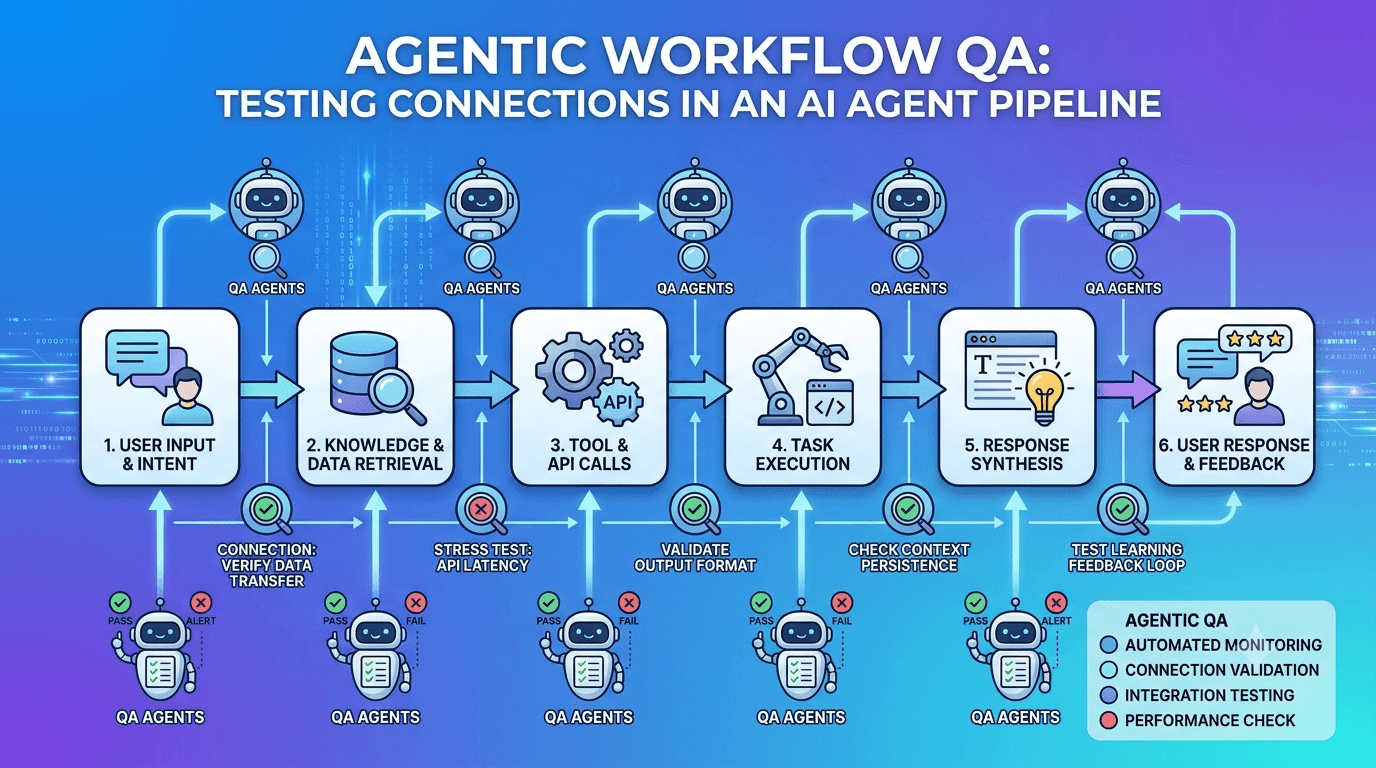
A QA partner experienced in e-commerce testing isn't automatically equipped to test a fintech compliance workflow or an AI-driven product. Ask pointed questions about their experience with your specific technology stack and industry constraints — and if you're building or maintaining AI-driven features, specifically ask how they approach testing non-deterministic AI output, since that requires a genuinely different methodology than traditional QA (covered in depth in our framework for testing AI agents). A partner who doesn't have a clear answer here likely hasn't done this work before.
How they handle scaling and ramp-up
Ask how quickly they can scale testing capacity up or down as your release cadence changes, and how new testers on their side get onboarded to your product's context. A partner who requires months of ramp-up for every new engineer assigned to your account will struggle to keep pace with a fast-moving product.
Red flags worth watching for
Vague answers about their test-case documentation practices, no clear defect-severity classification system, reluctance to share sample test plans or reports from past (anonymized) engagements, and pricing that seems significantly below market rate without a clear explanation of what's being cut to hit that price — usually coverage depth or reporting rigor.
The real cost comparison
Compare total cost of ownership, not hourly or per-project rate: a cheaper partner with weaker process discipline costs more in production incidents, rework, and the engineering time spent chasing down poorly-reported defects. The right comparison is "cost per genuinely caught defect before production," not "cost per tester hour" — and that number is rarely visible until you're already in the engagement, which is exactly why the process questions above matter more than the price sheet.
What we'd want you to ask us
If you're evaluating QA outsourcing partners including us, ask the same questions above — our process, communication cadence, and specifically our approach to testing AI-driven features are exactly the differentiators we'd want scrutinized rather than glossed over.
How Much Does a Custom Chatbot Cost? | Electronikmedia
Manual vs automated testing: which does your project actually need?
What is agentic workflow QA (and why it’s different from testing a chatbot)
QA metrics that actually matter for AI-driven QA teams
