


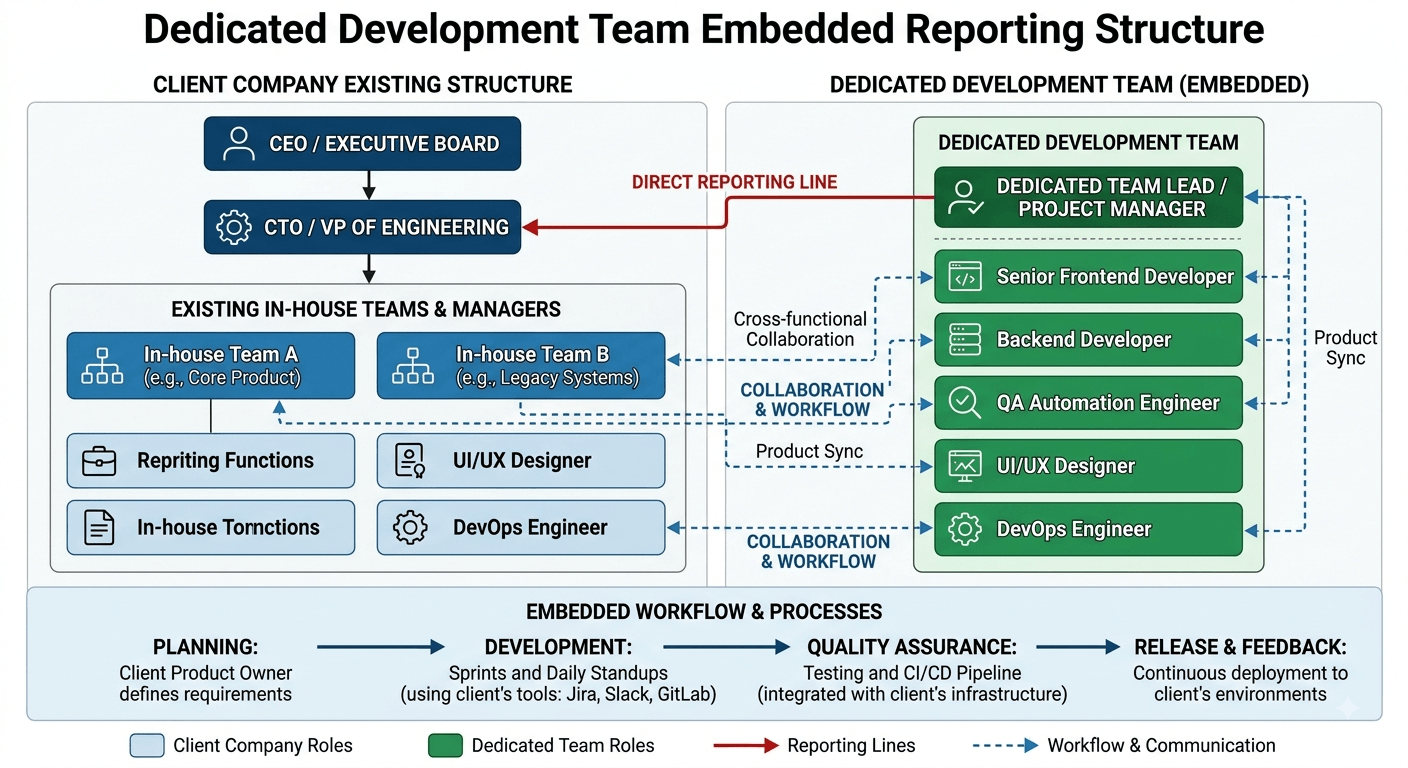
The short answer: you keep control by choosing a team that embeds into your existing workflow and reporting structure rather than working in isolation — the loss-of-control feeling usually comes from a team operating as a black box, not from outsourcing itself. A dedicated team done right reports into your process, not around it.
How do I hire a dedicated development team without losing control of my project?
Why "losing control" is usually a process problem, not a staffing problem
The fear is legitimate, but it almost always traces back to specific process gaps: no visibility into daily work, decisions made without your input, or a team that disappears into their own workflow and resurfaces weeks later with something that doesn't match what you needed. None of that is inherent to outsourcing — it's what happens when a team isn't actually integrated into how you work.
What "embedded" should mean in practice
A dedicated team that preserves your control joins your existing tools (your project management board, your Slack or Teams channels, your sprint ceremonies) rather than asking you to adapt to theirs. They attend your standups, not a separate one you're excluded from. They report progress in the format and cadence you already use to manage other work, so reviewing their output feels the same as reviewing any other team's.
Questions that reveal whether a provider actually works this way
Ask directly: will the team use our existing project management tools, or theirs? Will we have direct access to individual engineers, or only a single point of contact filtering everything? How often do we see working software, versus a status report describing progress? A provider whose answers describe adapting to your process, not the reverse, is the one that preserves control.
Where the risk actually shows up
The real risk in dedicated team engagements isn't the staffing model — it's unclear ownership of decisions. Define upfront who approves scope changes, who makes technical architecture calls, and how disagreements get resolved, the same way you'd define it for an internal team. This clarity matters more than any contractual clause about deliverables.
How this compares to project-based outsourcing
A dedicated team differs from a fixed-scope project engagement in one key way: you're buying ongoing capacity that adapts to your evolving roadmap, not a single deliverable defined upfront. This suits products still finding their shape more than a rigid project contract would — but it requires you to actively direct the work, the same way you'd direct any internal team, rather than handing over a spec and waiting.
The practical takeaway
Control isn't something you give up by choosing a dedicated team — it's something you maintain by choosing one that integrates into your existing process rather than building a separate one alongside it. Our dedicated agile development teams are built specifically around this principle: embedding into your workflow within days, using your tools and your cadence, so working with us feels like scaling your own team rather than handing work to an outside vendor.
How do I know if my business is ready for AI?
How much does software testing cost?
What features should a small business actually look for in a website chatbot?
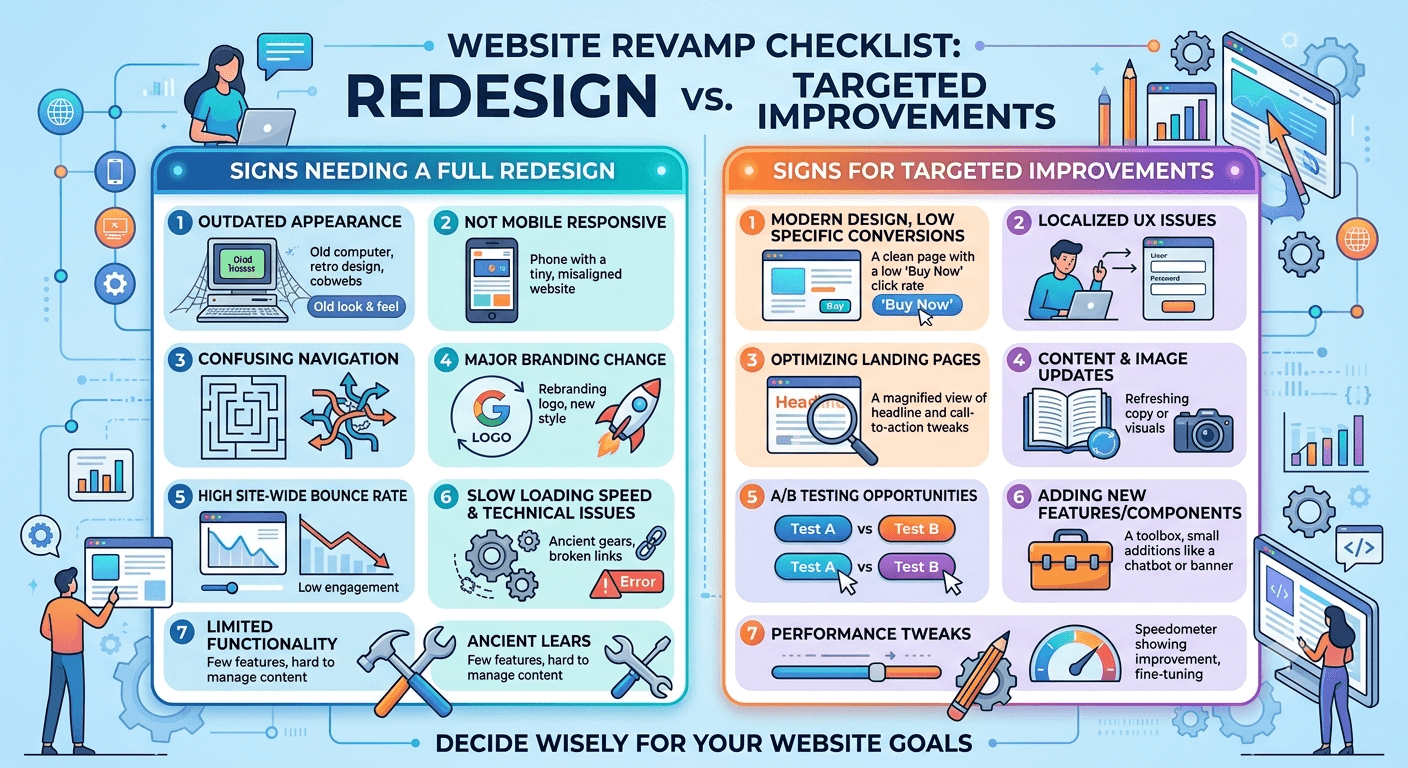
How do I know if my website needs a redesign?
