


The short answer: LangChain and LangGraph, CrewAI, AutoGen, and the Model Context Protocol (MCP) ecosystem are the open source options worth evaluating right now for building AI agents that automate multi-step workflows. Each fits a different shape of problem, and picking the wrong one costs you a rebuild six weeks in — so here's how they actually differ, from having implemented against real business workflows rather than benchmark tasks.
Where to find open source AI agent tools for automating complex workflows
LangChain / LangGraph — the flexible default
LangChain remains the most widely adopted framework for chaining LLM calls, tools, and retrieval, and LangGraph extends it with explicit state machines for multi-step agent workflows — useful when your process has real branching logic (if the invoice total exceeds X, escalate; otherwise, auto-approve). The tradeoff is surface area: the ecosystem is large and opinionated, and teams new to it often over-engineer a simple workflow because the framework makes complexity easy to reach for. Good fit when your workflow genuinely branches and you want fine-grained control over each step.
CrewAI — role-based multi-agent coordination
CrewAI organizes automation around defined agent "roles" collaborating on a task — a researcher agent, a writer agent, a reviewer agent, each with a scoped responsibility. This maps naturally onto business processes that already have a human division of labor, and it's noticeably faster to prototype than hand-rolling multi-agent coordination in LangGraph. The limitation: role-based framing can force an unnatural structure onto workflows that aren't actually collaborative in that sense — don't adopt it because it's popular if your workflow is really one linear pipeline.
AutoGen — conversation-driven agent orchestration
Microsoft's AutoGen frames multi-agent systems as agents conversing to solve a task, with strong support for human-in-the-loop checkpoints. It's a solid choice when the workflow needs a defined moment where a human reviews and redirects before the agent continues — which, in our experience testing these systems, is where a large share of production AI workflows should sit anyway.
Model Context Protocol (MCP) — standardizing the tool layer
MCP isn't a full agent framework — it's a standard for how agents connect to tools and data sources, and it's rapidly becoming the common layer underneath the frameworks above. If you're evaluating agent tooling today, checking MCP compatibility is worth adding to the list, because it affects how painful your integration layer will be later, and integration is where AI automation budgets actually go.
What open source frameworks don't solve for you
Every framework above handles orchestration — the "how do steps connect" problem. None of them hand you the harder parts: an evaluation harness for whether the agent's decisions are actually correct (see our framework for testing AI agents), the integration work to connect safely to your real ERP or CRM data, or the judgment about which of your workflows are worth automating in the first place versus which look automatable in a demo and fall apart on real edge cases.
When open source is the right call, and when it isn't
Open source frameworks are the right starting point when your team has engineering capacity to own the orchestration layer, your workflow is well-understood enough to encode, and you're comfortable maintaining a stack that updates fast and sometimes breaks compatibility between versions. They're the wrong starting point when the actual bottleneck is integration with a legacy system that has no API, when accuracy requirements are high enough that evaluation infrastructure matters more than orchestration choice, or when nobody in-house has bandwidth to own the framework as it evolves. That decision is close enough to the classic build vs buy question that it's worth reading alongside this one.
The honest recommendation
Start by mapping the actual workflow before picking a framework — which of the four we covered fits depends entirely on whether your process branches, whether it's naturally multi-role, and whether you need human checkpoints. Prototype small in whichever framework fits, and treat the framework choice as the easy 20% of the project; the integration and evaluation work is the other 80%, regardless of which tool sits on top. If you're mapping this out for a real business workflow and want a second opinion on the framework fit before committing engineering time, our AI development team scopes exactly this decision — and our forward-deployed AI engineers do it embedded in your actual environment rather than from a framework comparison chart.
How much does software testing cost?
What features should a small business actually look for in a website chatbot?
How do I know if my website needs a redesign?
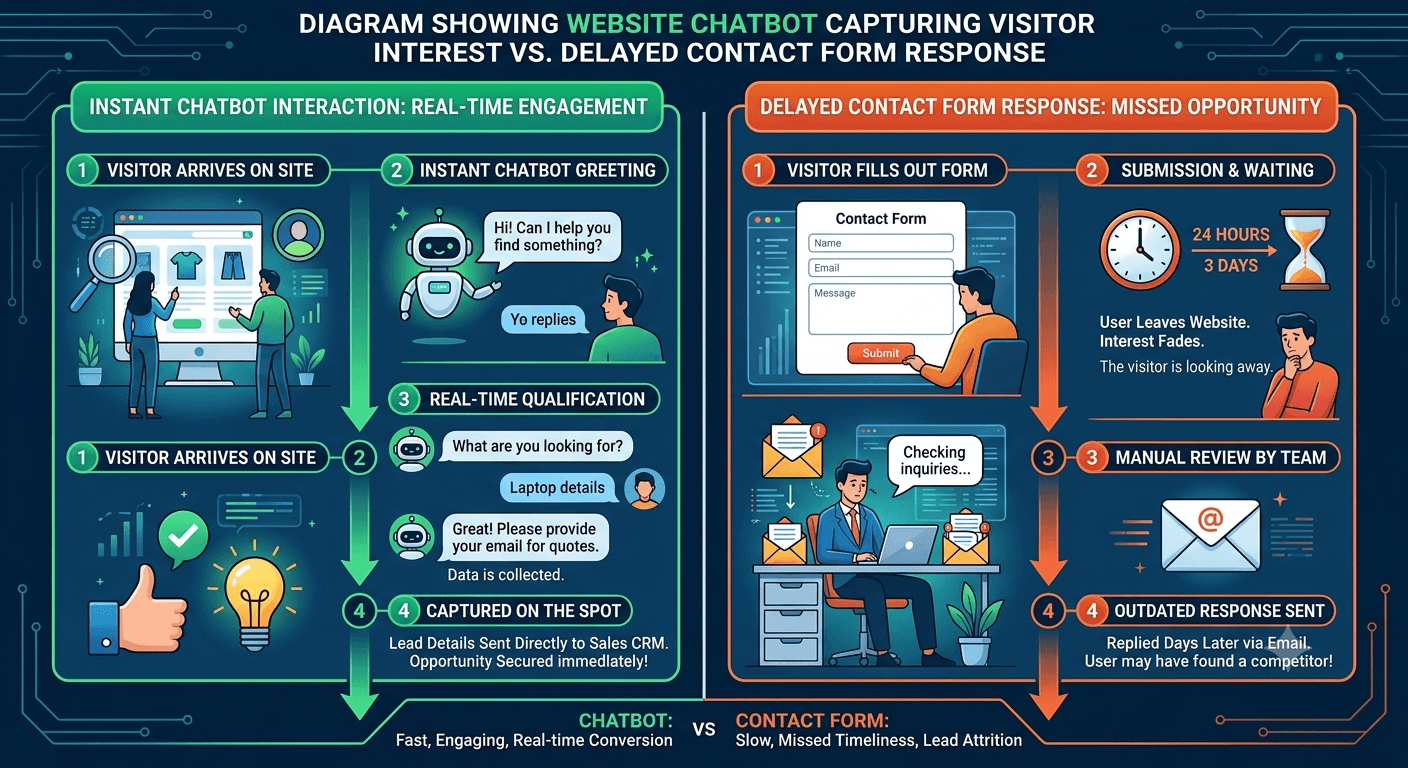
How does a website chatbot help small businesses get more leads?
