


The short answer: in-house gives you the most control at the highest cost, outsourced (domestic or nearshore) balances cost and communication ease, and offshore development offers the strongest cost efficiency with more deliberate process needed to manage communication and time-zone gaps — the right choice depends on your budget, your timeline, and how much day-to-day oversight you want to provide.
In-house vs outsourced vs offshore development: how do I decide?
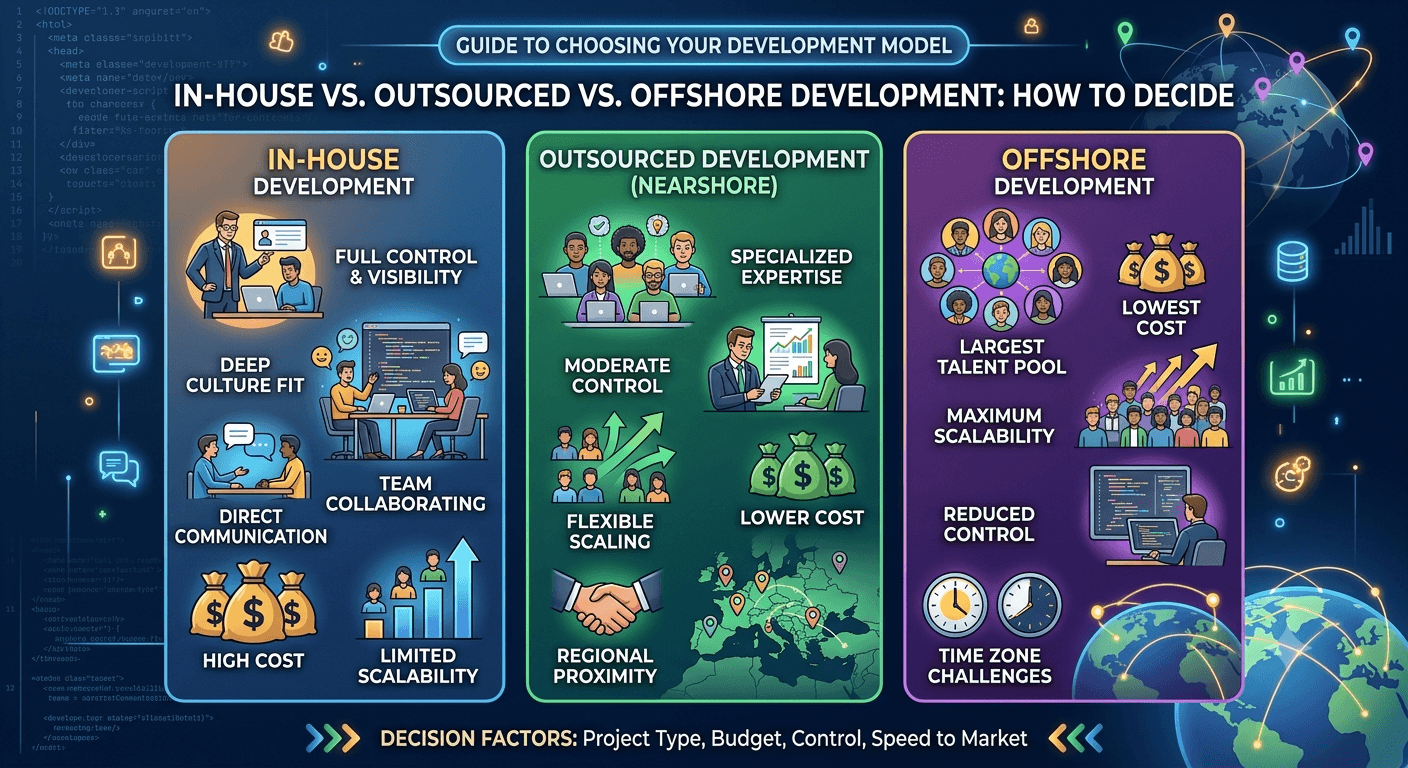
In-house: maximum control, maximum cost
Building an internal team gives you complete control over priorities, culture, and institutional knowledge that stays with your company long-term. It also carries the highest cost — salaries, benefits, recruiting time, management overhead — and the slowest ramp-up, since hiring and onboarding a capable team takes months, not weeks.
Outsourced (domestic or nearshore): balance, at a price
Hiring an external team in your own country or a nearby time zone reduces management overhead versus in-house while keeping communication easy — similar working hours, often similar language and business culture. This typically costs less than in-house but more than offshore, and is a reasonable middle path for teams that want speed without the coordination challenges of a large time-zone gap.
Offshore: the strongest cost efficiency, with real tradeoffs to manage
Offshore development, including from established hubs in India, offers the most significant cost efficiency and access to a very large talent pool — but requires more deliberate process to manage well: clear async communication habits, defined overlap hours for real-time discussion, and a vendor experienced in managing distributed collaboration rather than assuming it works the same as being in the same building. Done well, offshore development performs excellently; done carelessly, the communication gap becomes a real liability.
The question that actually matters
Rather than "which model is best," ask "which model fits how much oversight I want to provide, and how much time-zone flexibility I can accommodate." A hands-off client with a well-scoped project handles offshore development well. A client wanting daily hands-on involvement in every decision may find in-house or a closely-aligned-timezone outsourced team easier, regardless of the cost difference.
What separates offshore that works from offshore that doesn't
The deciding factor is rarely the model itself — it's whether the vendor has genuine process discipline: clear scoping, regular working demonstrations rather than just status reports, and real overlap hours for synchronous discussion when it's needed. This is the same distinction covered in our guide to questions to ask before hiring a software company.
The practical takeaway
There's no universally "best" model — only the one that fits your specific oversight needs, timeline, and budget. Our dedicated agile teams are built specifically to make offshore-model collaboration feel like an extension of your own team, with the process discipline that makes the model actually work.

What questions should I ask before hiring a software development company in Kochi?
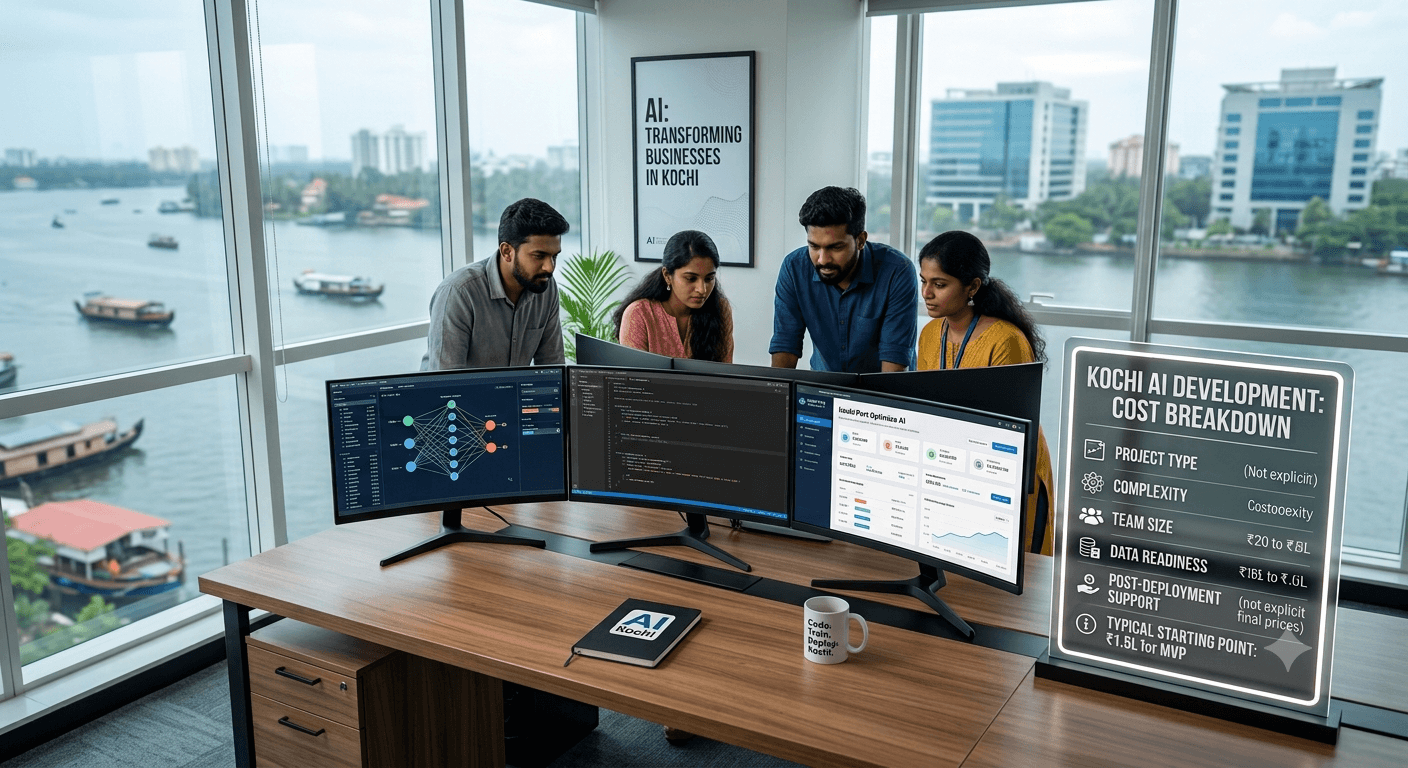
How much does it cost to hire an AI development company in Kochi?
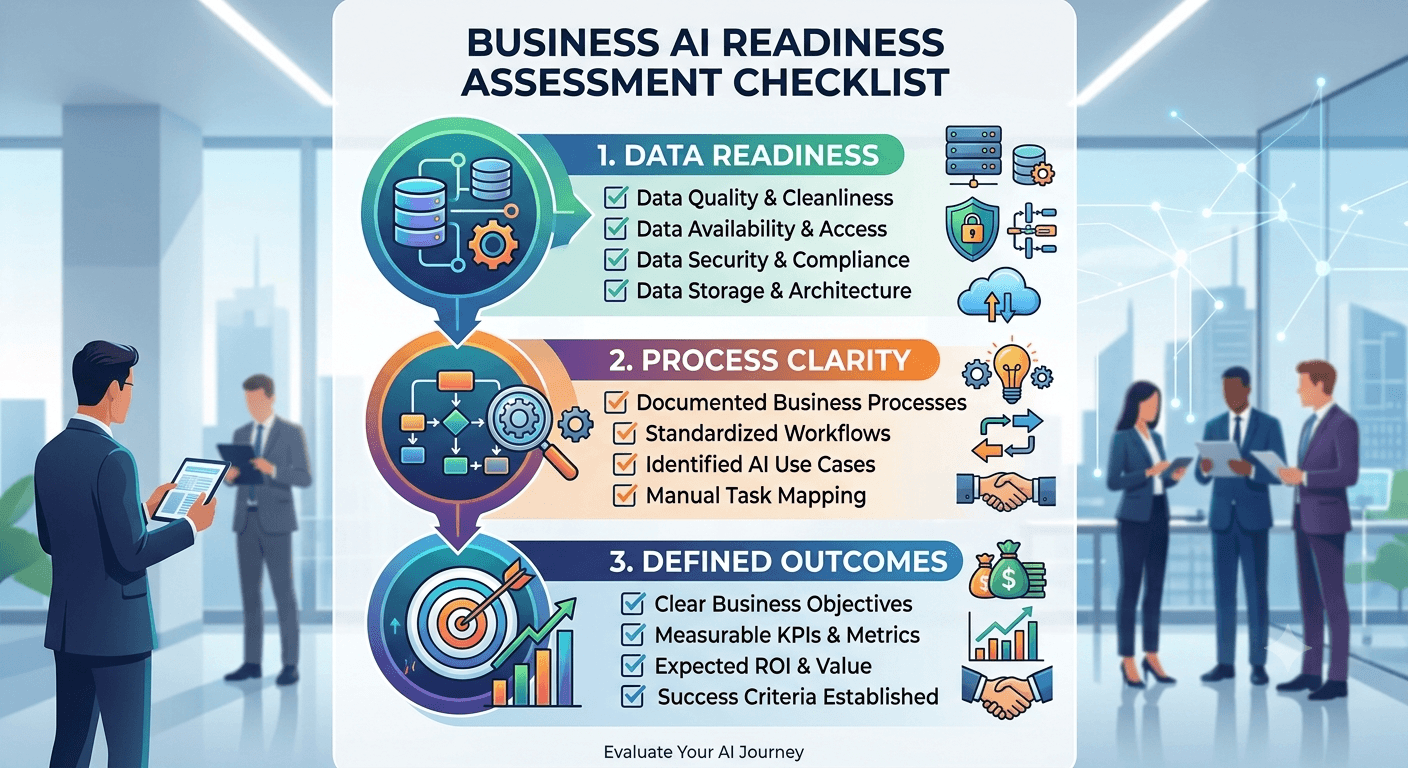
How do I know if my business is ready for AI?
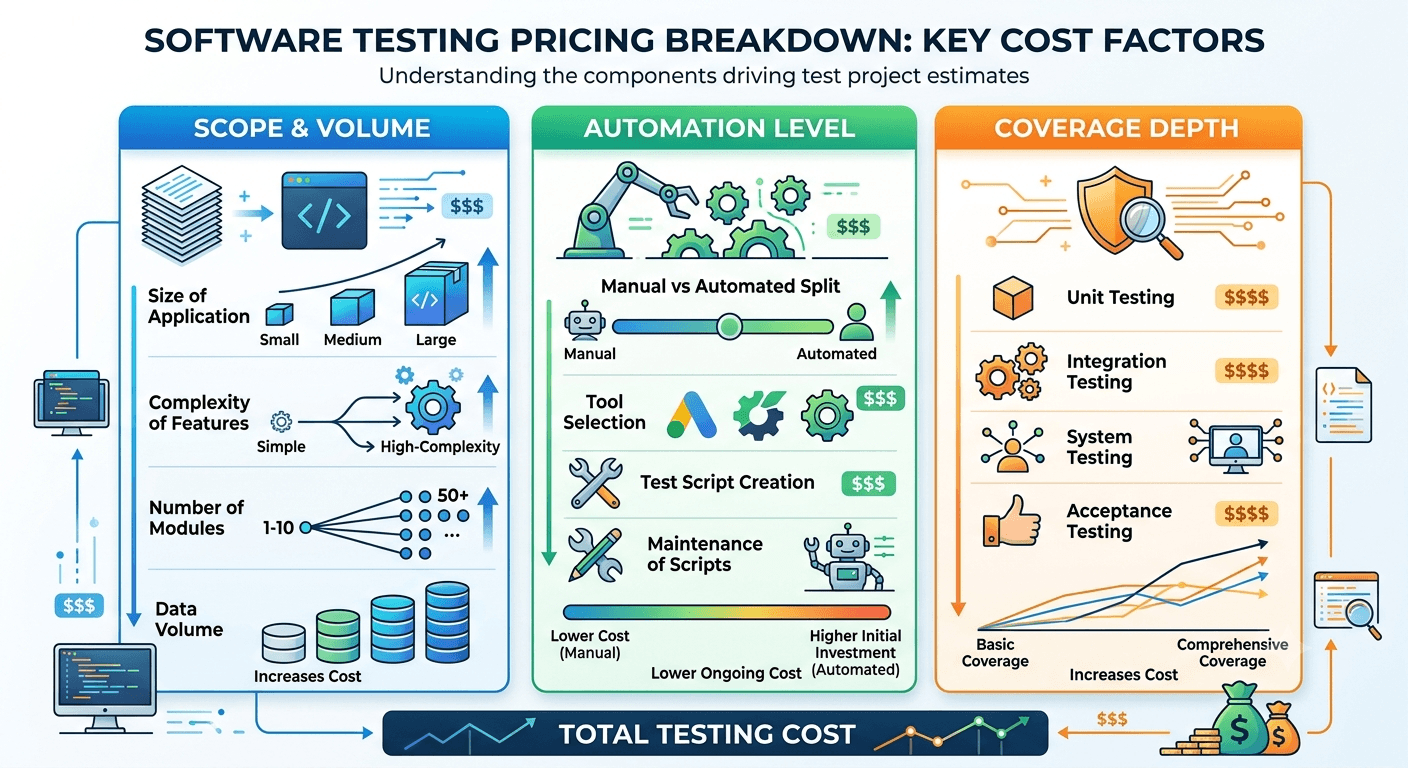
How much does software testing cost?
